Contractor garbage bags are widely used across industrial and commercial environments where standard waste bags are not sufficient. Their primary purpose is to handle heavy, bulky, or irregular waste materials that require higher strength and durability.
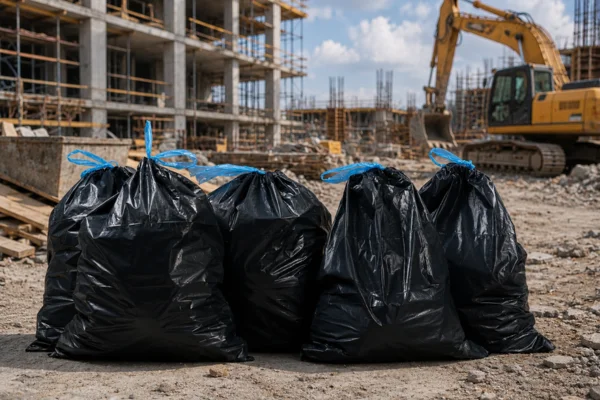
In construction and renovation settings, these bags are used to collect debris such as drywall, wood, insulation, and mixed waste. The materials involved are often sharp or uneven, which means the bag must resist punctures and tearing during both filling and transport. This is where heavy-duty contractor garbage bags provide a clear advantage over lighter alternatives.
In commercial facilities, including warehouses and maintenance operations, contractor bags are used for large-scale cleanup and general waste management. Their higher capacity reduces the frequency of bag changes, improving operational efficiency. They are also commonly used during seasonal cleanups, landscaping work, and demolition projects.
At Alte-Rego, contractor garbage bags are manufactured using polyethylene designed for strength and flexibility. This allows the bags to handle stress without splitting, even when exposed to demanding conditions. Consistency in thickness and sealing ensures that performance remains reliable across different use cases.
Another important factor is size and gauge selection. Not all applications require the same level of thickness. By offering multiple options, Alte-Rego allows businesses to choose the right specification based on their specific needs, rather than relying on a generic solution.
Contractor garbage bags are not simply larger versions of standard bags—they are designed to meet the practical demands of industrial waste handling. Choosing the right type can improve workflow efficiency, reduce material failure, and support safer cleanup processes.
For businesses managing heavy or high-volume waste, selecting the appropriate contractor garbage bag is a key part of maintaining consistent operations.