
Quick Answer
Modern flexible barrier films protect sensitive products by combining several polymer layers in one thin film. Each layer has a job: one blocks moisture, one blocks oxygen and other gases, one gives strength and one seals. This lets manufacturers protect powders, pharmaceuticals and moisture-sensitive materials with thinner, lighter packaging.
Key Takeaways
- Co-extrusion and lamination combine many layers in one film.
- Barrier layers such as EVOH, PVDC, metallisation and coatings block gases and moisture.
- Hygroscopic powders need very low moisture transmission.
- New resins let thinner films keep high puncture resistance.
- Custom barrier blends should be validated with shelf-life testing.
Some products are damaged by very small amounts of moisture or gas. Hygroscopic powders clump, active ingredients lose strength, and specialty chemicals react with air. For these products, the packaging film is a critical part of quality.
This article looks at how multi-layer barrier films work, how they protect sensitive products, how new materials balance strength with thinner gauges, and how to work with flexible barrier film suppliers in Canada on a custom solution.
Multi-Layer Co-Extrusion: How It Works
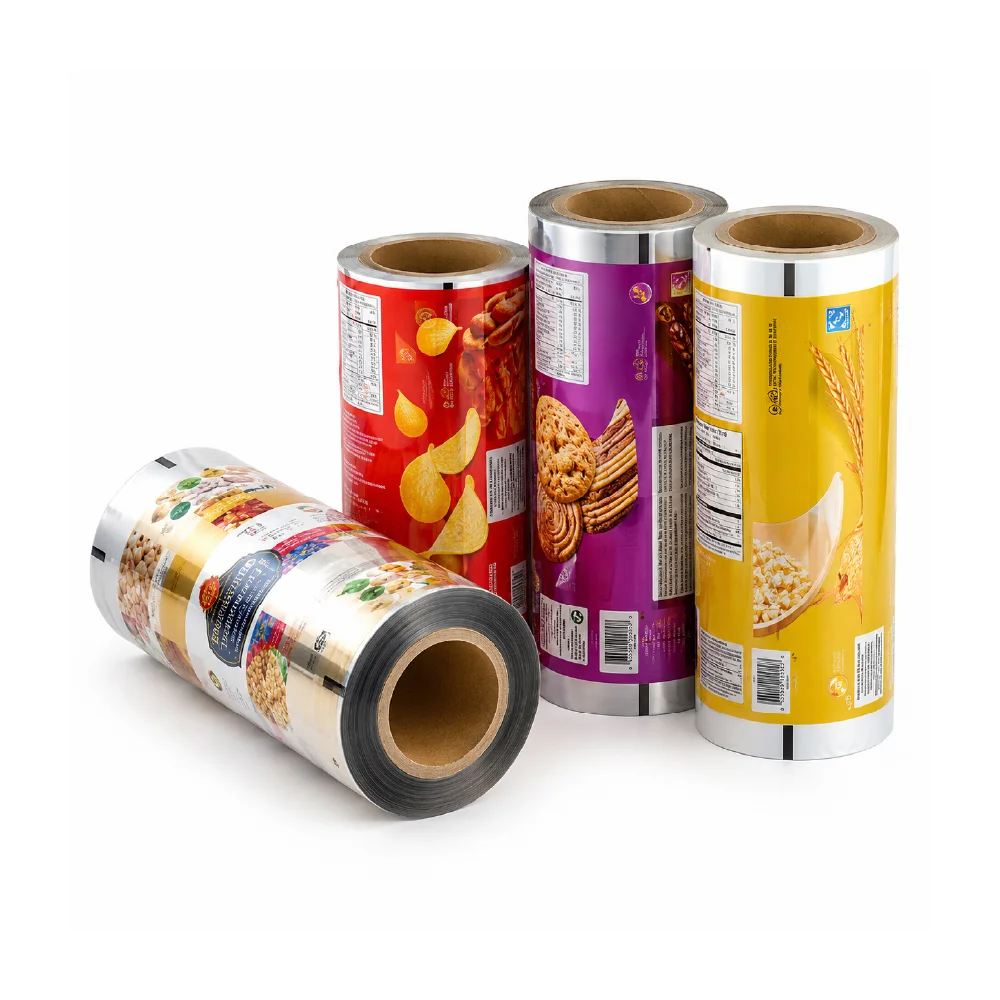
In co-extrusion, several molten polymers are pushed through one die at the same time to form a single film with distinct layers. Films can have three, five, seven or more layers. In lamination, separately made films are bonded together with adhesive or heat.
Each layer adds a property:
| Layer | Common materials | Role |
|---|---|---|
| Outer | PET, BOPP, nylon | Strength, stiffness, printing surface |
| Oxygen barrier | EVOH, PVDC, nylon | Blocks oxygen and other gases |
| Moisture barrier | HDPE, PP, metallised film | Blocks water vapour |
| Tie layers | Adhesive resins | Bond layers that do not stick naturally |
| Sealant | LDPE, LLDPE, metallocene PE | Reliable heat seals |
Because each layer is thin, the total film can stay light while still giving high barrier.
Recent improvements
- Metallocene polyethylenes give tougher, clearer sealant layers at lower thickness.
- Thin coatings, such as aluminium oxide or silicon oxide, add transparent barrier without foil.
- Mono-material structures, built mostly from one polymer family, aim to keep barrier while being easier to recycle.
Protecting Powders, Pharmaceuticals and Hygroscopic Materials
Hygroscopic materials absorb moisture from the air. This includes many food powders, salts, sugars, chemicals and pharmaceutical ingredients.
When they absorb moisture they can:
- Cake or clump, making them hard to dose or pour.
- Lose potency or react chemically.
- Grow microbes.
- Fail quality specifications.
For these products, a film with a very low MVTR (moisture vapour transmission rate) is essential. Products that oxidise also need a low OTR (oxygen transmission rate). Good seals matter as much as the film itself, because a weak seal lets moisture in even when the film is excellent.
Extra protection options
- Inner liners inside drums, boxes or bulk bags.
- Desiccants inside the package.
- Nitrogen flushing to remove oxygen.
- Heat-sealed rather than tied closures.
Balancing Puncture Resistance and Thin Gauge
Thinner films use less material and cost less to ship, but they must still survive filling, handling and transport. New resins and layer designs help strike this balance:
- Tough sealant resins resist punctures and flex cracks.
- Nylon layers add puncture resistance for sharp or heavy contents.
- Better layer distribution puts strength where it is needed.
The best gauge depends on product weight, particle sharpness, filling method and distribution route. Testing on your line is the only way to confirm it.
Developing a Custom Barrier Film with Your Supplier
- Define the product’s risks. Moisture, oxygen, light, aroma or chemical attack.
- Set the shelf-life target. For example 12 or 24 months.
- Share storage and transport conditions. Temperature and humidity ranges.
- Agree on test methods. Barrier tests, seal tests and real-time or accelerated shelf-life studies.
- Run trials. Test samples on your equipment and check results before scaling up.
Working with Alte-Rego on Barrier Films
Alte-Rego Corporation has manufactured flexible packaging in Toronto since 1988 with FSSC 22000 and GFSI certification. We supply laminated films, BOPP film and other specialty films, and work with customers on structures suited to their product and shelf-life requirements. Share your product details and testing needs, and our team will help you find the right starting point.
Frequently Asked Questions
What is co-extruded barrier film?
It is a film made by extruding several polymer layers at once, each adding a property such as strength, oxygen barrier, moisture barrier or sealability.
Which material blocks oxygen best in flexible packaging?
EVOH and PVDC are common high-oxygen-barrier layers. Metallised films and foil also block gases well.
How do I protect a hygroscopic powder?
Use a film with very low moisture transmission, make strong heat seals, and consider liners, desiccants or nitrogen flushing for extra protection.
Can barrier films be recyclable?
Some newer mono-material structures are designed to be easier to recycle while keeping useful barrier. Recyclability depends on local programs.
Explore Related Alte-Rego Products
- Laminated Films – Multi-layer laminated films that combine barrier, strength and print quality.
- BOPP Film – Clear, stiff BOPP film with good moisture resistance.
Need a custom size or specification? Call (416) 740-3081, email marketing@alte-rego.com or request a quote from our team.